
BPH State Release Scope
The California Board of Parole Hearings is part of the CDCR release landscape for people whose state-prison term or sentence type requires parole suitability or eligibility review. For a Tulare County case, BPH becomes relevant only after a state-prison commitment or parole-eligible sentence. A short county jail release from Adult Pre-Trial, Bob Wiley, or South County is not confirmed through BPH.
BPH research is useful before and after a hearing. The schedule can show date, time, institution or location, and whether the hearing is in person or by video conference. The results page can show the outcome terminology after a scheduled proceeding. Eligibility pages define release-date labels such as EPRD, MEPD, NPED, YPED, and EPED. Read these sources with CDCR CIRIS and the Tulare Superior Court sentence, because a hearing result does not always mean immediate release.
Tulare BPH Hearing Search
The BPH hearing schedule is the source for upcoming parole hearings. Research notes that BPH says schedules include date, time, location, and hearing mode, and that schedules are updated weekly on Thursday morning. As of the researched page date, monthly schedule links were visible for the current calendar period. For a Tulare County person, match the state record to the court case and commitment county before relying on a name match.
- Start with CIRIS or a court record to confirm the person is a CDCR prisoner.
- Use the BPH schedule to look for an upcoming or recent hearing.
- Compare name, CDCR number if available, institution, and hearing date.
- After the hearing week, check BPH results for outcome terms.
- Use court, CDCR, and parole sources to verify whether release actually occurred.
The schedule alone is not a release record. It shows that a proceeding is scheduled. The result and later CDCR/parole records explain what happened after the proceeding.
BPH Release Result Meanings
The BPH parole suitability hearing results page posts weekly and monthly results and defines common outcome labels. These labels must be read carefully. Grant means the person was found suitable and recommended for release to parole, but research notes that Legal Division and Governor review may still apply before finality. Deny means not suitable. Postpone, continue, waive, stip, split, or cancelled do not all mean release.
| BPH outcome | Release meaning |
|---|---|
| Grant | Recommended suitable for parole, subject to required review |
| Deny | Not found suitable at that hearing |
| Postpone or Continue | Hearing did not reach final suitability decision that day |
| Waive or Stip | Person did not proceed to a standard grant/deny decision |
| Cancelled | Hearing did not go forward, sometimes for reasons unrelated to release |
Because BPH results are state-prison records, pair them with CDCR location and parole status. If the person was released from a Tulare County jail rather than state prison, BPH is the wrong source.
BPH Schedule Source
The official BPH hearing schedule is a matched source for state parole-hearing research.
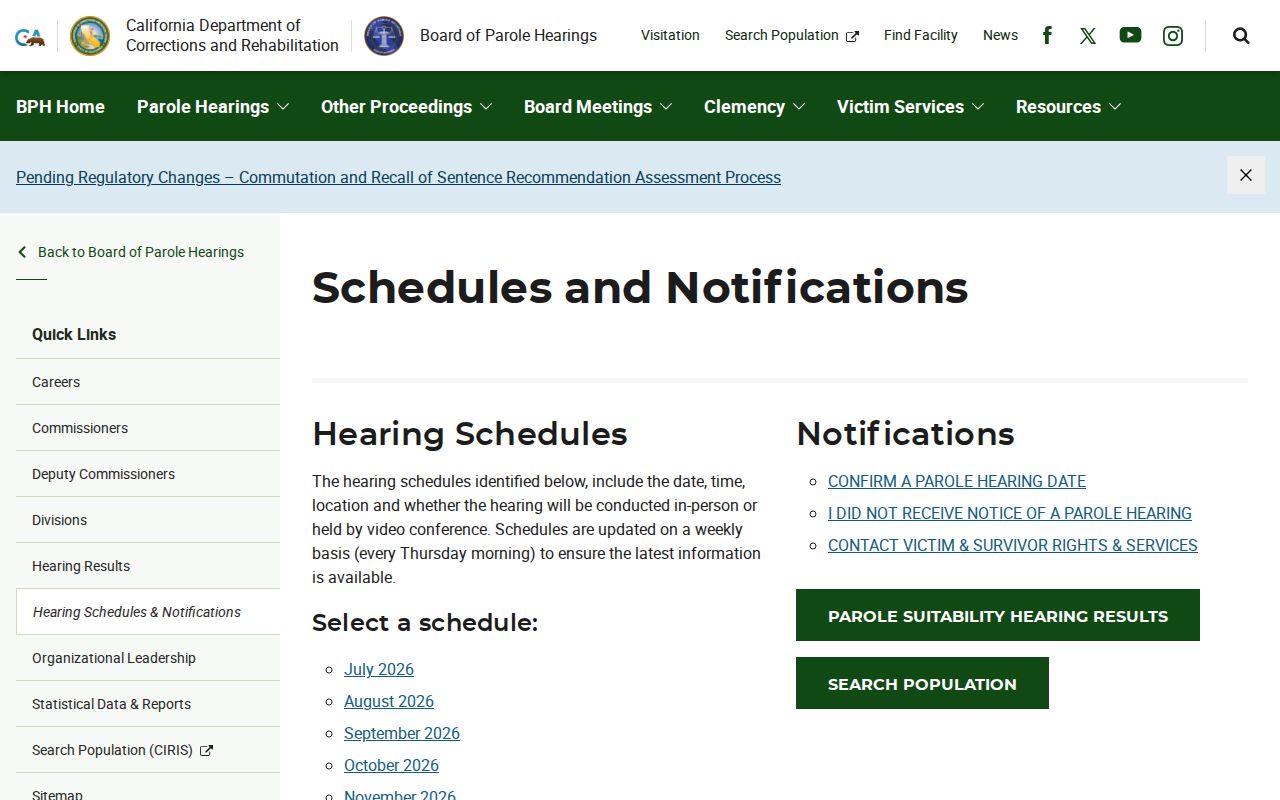
The schedule is a planning source. Use the results page and CDCR record to learn whether a hearing changed release status.
Tulare Parole News Context
Research found that Tulare County District Attorney press releases sometimes report parole outcomes for local crimes, including parole-denial news tied to a Visalia case. Treat local news as context, not as the official release record. BPH remains the official schedule and results source. CDCR and court records remain the record sources for custody, commitment, and sentence history.
For a person released to local PRCS rather than state parole, Tulare County Probation may become the local supervision channel. For a person still in CDCR custody, CIRIS and BPH are more relevant. For ordinary county jail release, return to the sheriff, VINE, court, and records path.
- Parole suitability
- BPH review of whether a state prisoner should be released to parole.
- Grant
- A favorable BPH result that may still require review before release.
- Parole
- State supervision after prison release, distinct from county probation or PRCS.
Note: A BPH grant is not the same thing as a county jail release record.
BPH Eligibility Dates
BPH eligibility terms help explain why a person has a hearing even when no simple release date appears. Determinate cases can involve an Earliest Possible Release Date. Indeterminate cases can involve a Minimum Eligible Parole Date. Other tracks include nonviolent parole, youth parole, and elderly parole eligibility. These labels come from the state prison system and should be matched to the court sentence and CDCR record.
A result must be read in sequence. First, confirm the Tulare County court sentence and CDCR custody record. Second, check whether the person is eligible for a BPH hearing. Third, read the schedule for the hearing date and mode. Fourth, read the results page for the outcome. Finally, verify any release or parole status through CDCR or the supervising parole authority. Skipping a step can turn a scheduled hearing or a postponed result into a false release claim.
When the outcome is grant, the research notes that review by the Board's Legal Division and Governor's Office can still matter before finality. When the outcome is deny, postpone, waive, continue, stip, split, or cancelled, avoid saying the person was released unless another official source confirms it.
This is why a Tulare County parole-hearing search should start with identifiers. Use the court case, CDCR number, commitment county, institution, hearing date, and result together. A local news item may help identify the case, but it should not replace the official BPH result or CDCR custody record. If the person later returns to Tulare County under PRCS or another local supervision path, the probation page becomes relevant after the state-prison release event is confirmed.
For older Tulare County convictions, the local court record may be the best way to connect the crime, sentence, and commitment county to a current BPH calendar entry. For current custody status, CIRIS or CDCR remains the companion source. For release to county PRCS, Tulare Probation supplies the local supervision context after state custody ends.